How We Built Molicel's India Market
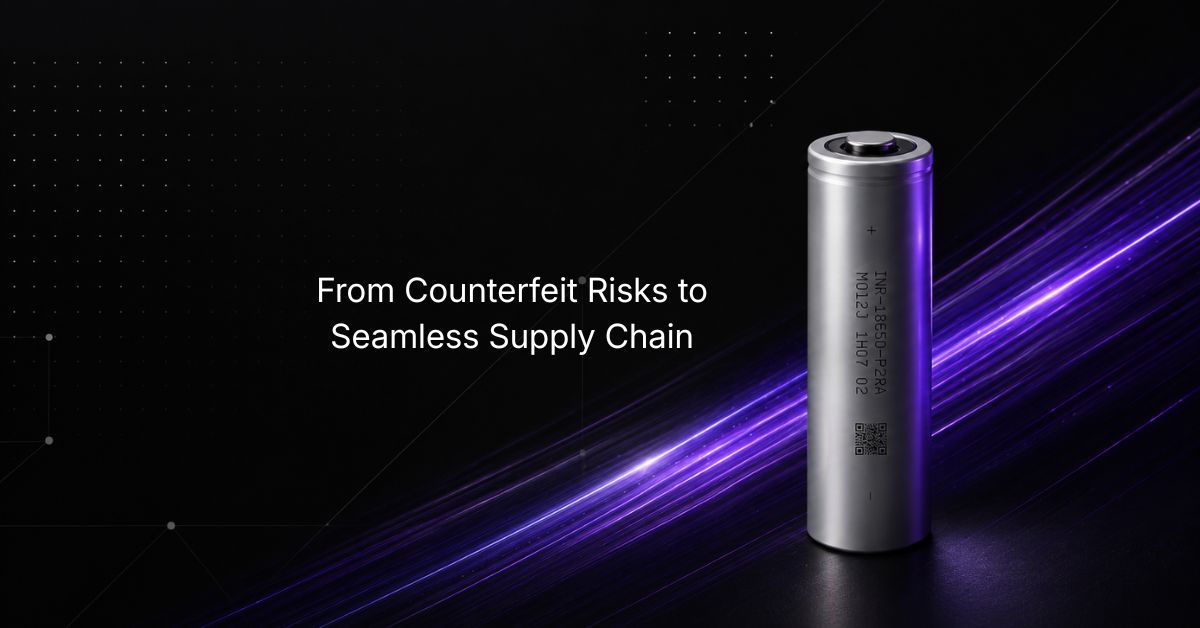
How Procurabl built Molicel's verified, compliant lithium-ion cell supply chain in India, from counterfeit-plagued sourcing to 5–7 container loads a year
Industry: Aerospace / UAV
Product: High-discharge cylindrical lithium-ion cells
Origin: Taiwan
Customer Challenge: Molicel's cells were already in demand among Indian UAV and EV manufacturers, but no verified, compliant channel existed to bring genuine product into the country. Buyers were routinely burned by counterfeit and mislabelled cells sold through unverified resellers on open marketplaces, and India's import marking and traceability requirements had no established playbook.
Capabilities Leveraged: Verified direct sourcing, import compliance and lot-level traceability documentation, manufacturer identification and development, application engineering support, production-scale supply chain management.
Result: Grew from ~25,000 cells/year in scattered small orders (2,000–5,000 cells each) to 5–7 full container loads/year, across roughly 10 manufacturer relationships built in about a year.
Introduction
Molicel's high-discharge cylindrical cells, known for their energy density, low internal resistance, and discharge rate, were exactly what Indian drone, UAV, and high-performance EV manufacturers were looking for. The demand existed before Procurabl ever got involved. What didn't exist was a reliable way to get the real product into the country.
Early Challenges
Manufacturers who tried to source Molicel cells independently ran into the same wall: Alibaba and similar marketplaces were flooded with low-grade sellers passing off counterfeit or degraded cells as genuine. Buyers who ordered through those channels regularly received product that performed nothing like spec. For applications where cell performance is safety-critical flight time, thermal behaviour, discharge consistency which is not a minor defect, it's a program risk eventually. By the time some manufacturers reached out to Procurabl, they'd already lost money, time, and trust in the category.
Compounding the sourcing problem, India's import and compliance requirements for lithium-ion cells were still taking shape. The cell markings and lot-level traceability documentation needed to clear customs and satisfy end-use compliance had no fixed, established playbook. There was no compliant, verified route to bring Molicel cells into India at any real scale.
“Proliferation of low grade cells and crossing the hurdles from Indian customs are the massive bottlenecks we faced to enter Indian markets” - Johnson Chieng, Sales Manager, E-One Moli Energy
Building the Channel
Rather than acting as a conventional distributor placing product into a catalogue and waiting for inbound orders, Procurabl integrated into Molicel's market-facing and technical operations directly. That meant:
- Establishing a verified, direct sourcing channel that eliminated the counterfeit and grey-market risk manufacturers had been exposed to
- Identifying and developing Indian manufacturers across the UAV/drone segment first, then high-performance EV applications
- Supporting customers through application engineering, not just procurement, to move them from evaluation samples to production commitments
- Staying involved as customer demand scaled, rather than handing off after the first order.
Compliance and Traceability
Building a genuinely compliant import pathway meant establishing the marking and lot-level traceability discipline directly with Molicel, from the ground up, not assembling documentation after cells had already landed. That documentation is what let manufacturers clear customs reliably and satisfy the end-use compliance checks their own customers required, closing the gap that had left the market exposed to counterfeit risk in the first place.
“If not for Procurabl, we were practically lost on how to source the right cells” - Harshvardhan, Supply Chain Manager (UAV OEM)
Scaling to Production
Before Procurabl:
- ~25,000 cells/year
- 2,000–5,000 cells per typical order
- No verified, compliant import channel
After:
- 30,000+ cells per order
- 5–7 full container loads/year
- A verified, compliant sourcing pathway manufacturers could rely on
Over roughly a year, Procurabl opened relationships with around 10 manufacturers and built a pipeline that moved Molicel well beyond its earlier order sizes in India, not by waiting for demand to surface, but by finding the manufacturers, solving the engineering questions standing between evaluation and adoption, and staying involved through the scale-up.
What's Next
As Molicel's presence in India grew, the opportunity reached a scale where an authorized distributor was established to support it going forward. The market Procurabl built from zero now sustains itself on dedicated distribution infrastructure.
“Procurabl’s platform and their team’s understanding of compliance needs has made our procurement process incredibly seamless.” Lalit Gedam, VP Sales, Global Electronics
Want to build your market in India? Let's talk
FAQ
How can a foreign battery or electronics manufacturer enter the Indian market?
The most reliable path is a market-entry partner who handles verified sourcing, manufacturer development, and India-specific compliance together, rather than appointing a distributor before demand or a compliant import channel exists. A distributor sells into an existing market; a market-entry partner builds the market first, then hands it off once it can sustain dedicated distribution.
How do you protect a brand from counterfeit product when entering India? Counterfeit and mislabeled product typically enters through unverified resellers on open marketplaces, where buyers have no way to confirm authenticity before the product arrives. The fix is a direct, verified sourcing channel tied to the manufacturer itself, so every cell or component reaching an Indian buyer can be traced back to a genuine, authorized source rather than an intermediary of unknown provenance.
What import compliance is required to sell lithium-ion cells in India? Requirements around cell markings and lot-level traceability documentation for lithium-ion imports have been evolving in India without a single fixed playbook, which leaves manufacturers exposed at customs clearance and in downstream end-use compliance if it isn't addressed proactively. Building a compliant pathway means establishing that documentation and marking discipline directly with the manufacturer before cells ship, not retrofitting it after a shipment is held up.
How long does it take to scale from pilot orders to production volume in India? In this engagement, moving from small, sporadic orders (2,000–5,000 cells) to consistent full-container-load production orders took roughly a year, built through direct manufacturer development across around 10 relationships rather than waiting for inbound demand. Timelines vary by category and compliance complexity, but sustained, hands-on manufacturer engagement is what compresses it.